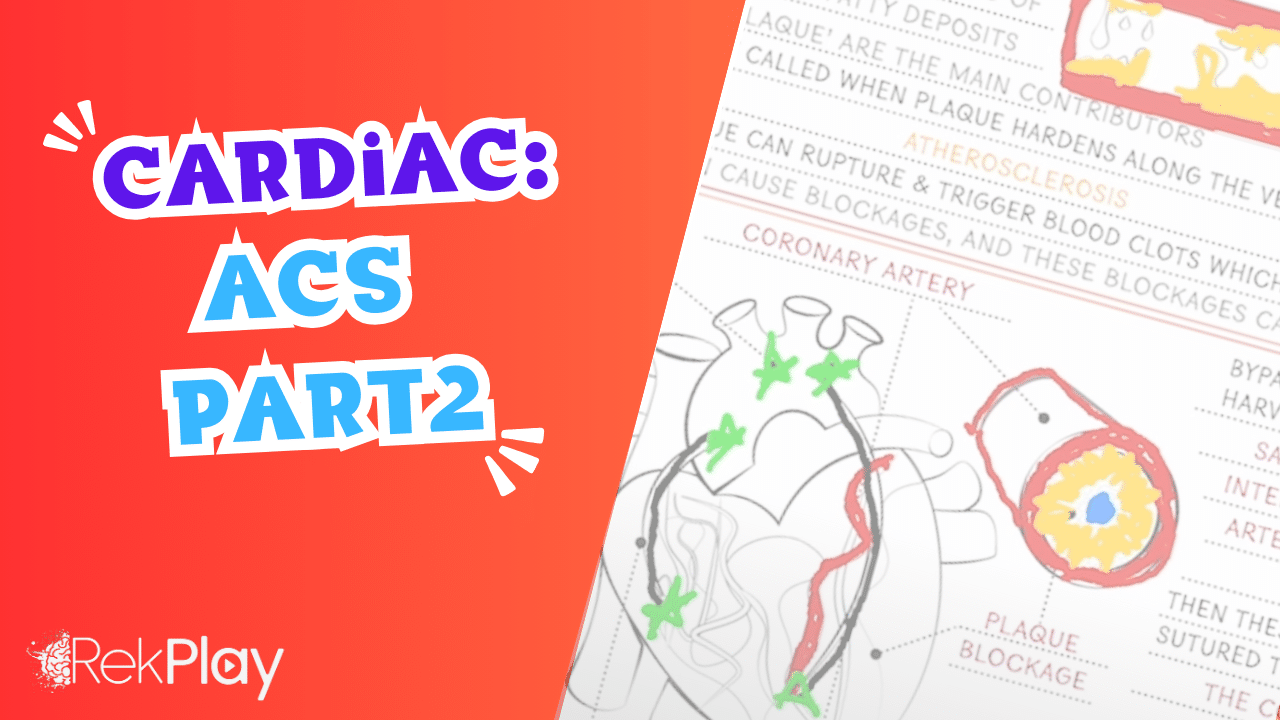
Acute Coronary Syndrome isn’t always caused by a complete blockage — sometimes the heart muscle suffers from demand ischemia, when oxygen needs outweigh supply. In this lesson, we’ll explore how to recognize demand ischemia, and why troponin is such a crucial biomarker for detecting cardiac injury. We’ll cover how troponin testing guides ACS diagnosis, how elevations can be complicated in patients with chronic kidney disease, and connect it all back to the role of atherosclerosis and coronary artery blockages. Finally, we’ll look at how bypass grafts restore blood flow, ensuring the heart receives the oxygen it needs.
**Don’t forget to can re-print the PDF’s attached to this lesson so you can retest your knowledge as much as necessary!
Have a Quizlet account? Now you can test your knowledge on this section with flashcards, practice questions, and matching games by clicking the links below:
Video Timestamps:
00:05 Understanding demand ischemia in ACS
01:05 Understanding demand ischemia
02:06 Troponin is a crucial cardiac biomarker for detecting heart muscle injury.
03:04 Understanding troponin testing in ACS diagnosis.
04:00 Monitoring troponin levels for cardiac occlusion
04:57 Understanding Troponin Elevation and CAD in CKD Patients
06:00 Atherosclerosis causes blockages in coronary arteries
07:08 Bypass graphs are sutured to the coronary arteries and aorta for a heavy blood supply.